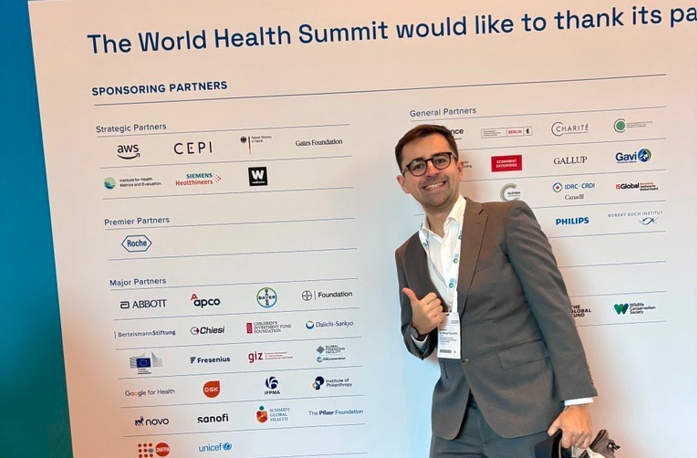
Last week, Collective Member Antoine de Bengy Puyvallée attended the World Health Summit in Berlin. Here, he reflects on the role of private actors, and in particular so-called 'sponsoring partners'.

The Collective Blog
Do you wish to contribute to the Collective Blog?
We welcome entries from guest contributions from authors wishing to discuss topics related to the political determinants of health. If you wish to submit a blog article, please reach out to the Secretariat Coordinator Emma Sandvik Ling at e.s.ling@globe.uio.no for more information.
"Though contemporary efforts to establish medical manufacturing infrastructures on the continent are sometimes framed as path-breaking, they in fact precede the Covid-19 pandemic, and even the HIV/AIDS pandemic" says Collective Member Lauren Paremoer. She presents key findings from a recently published article she co-wrote with Hamish Evans and Anne Pollock, exploring how medical manufacturing was imagined and pursued in the 1960s and 70s versus in a post-covid world.
"In the US and elsewhere, right-wing populism now coexists with neoliberalism’s isolation of market dynamics from state regulation, inextricably intertwining the moral and political economies of unpaid caregiving." say Alicia Ely Yamin and Solana Yoma
In this moment of great flux in global health – amid U.S. withdrawal from the World Health Organization – what steps are middle powers and nations on the periphery taking to assert their influence? What symbolic and material rewards accrue from making durable investments in global health diplomacy? And what lessons does Thailand’s model offer scholars and policymakers in the Global South? This blog explores the strategic growth of Thailand’s diplomatic presence at the WHO, reflecting on themes and issues raised in a new article in Politics and Governance by Collective member Joseph Harris and co-author Suriwan Thaiprayoon.
"Finance and financialisation are increasingly central to sectors and institutions that impact global health security: they shape the conditions that generate health threats, influence the pathways through which they spread, and reconfigure the systems designed to detect and respond" says Collective Member Ben Hunter.
A nationwide strike among trainee doctors in 2024 has highlighted a tension in the governance of the medical sector in South Korea. Collective Member Jin-Hwan Kim offers his reflections.
What does the contemporary approach to One Health look like? And do One Health policies have transformative potential? Collective Member Remco van de Pas presents findings from a recently published chapter in the edited volume One Health, Ecology, and the Politics of Emerging Infectious Diseases.
In this piece first published by Science Politics, Collective Member James Pfeiffer reflects on the end of USAID and how the US might reimagine foreign aid in the future.
With aid financing for health in freefall, now is the time for political leaders to launch domestically financed universal health coverage (UHC) reforms says Collective Member Robert Yates.
The U.S. government and Kenya have signed a new Health Cooperation Franework. What does this mean for health and digital rights? Collective member Sara (Meg) Davis reflects on challenges for data governance.
In the Philippines, corporate social responsibility (CSR) is often celebrated as a sign of good corporate citizenship. When CSR is utilized by a health-harming industry like the alcohol industry, is CSR a genuine contribution to society, or a strategic tool to shape political discourse and policy?
How can global health scholars address waning trust in global health? Collective member Kelley Lee offers her reflections
How does the mass outmigration of healthcare professionals widen disparities between the global north and south? And how does this sustain (neo)colonialism in global health? Collective Member Ramya Kumar reflects on the Sri Lankan context.
How do we achieve true universal health coverage with equal access for all? Collective Member Naoki Ikegami offers his reflections.
After an unexpected moment of connection across political divides, Collective Member Nora Kenworthy reflects on polarization and public health in the US.
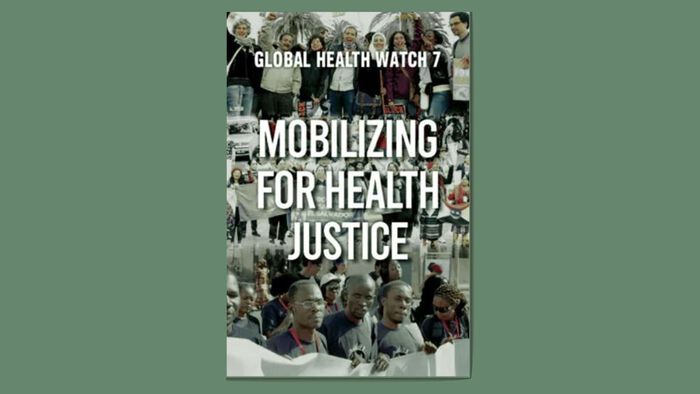
Celebrating the release of the Global Health Watch 7 in book form, Collective Member Ron Labonté gives us an overview of what to expect.
Sakiko Fukuda-Parr, Alicia Ely Yamin and their co-authors argue that we must go beyond nostalgia for the global health order that was, and focus on creative innovations and coalitions to ensure equity and Global South agency going forward.
This piece was originally published in Global Policy Opinions.
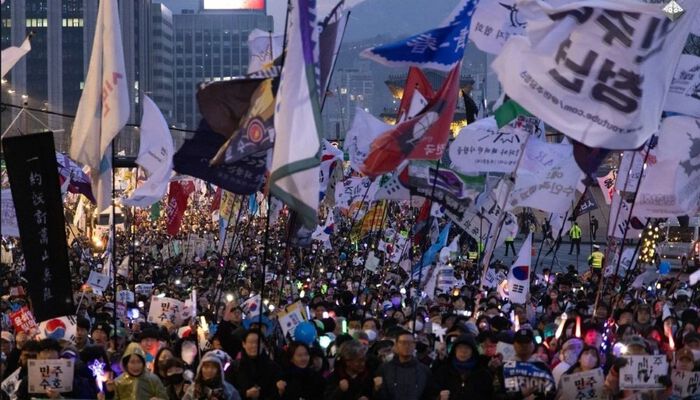
Collective member Jiwoo HA calls for radical change in the health sector and beyond: "There is a pressing need for more radical and creative strategies to connect our narratives with ordinary people. They should shed light on domination and the suffering of powerless people, while empowering fellow citizens to critically envision a more equitable and democratic world."
The second Trump administration has introduced radical changes to American food policy, including freezing the USAID Food for Peace program. Collective member Mary F. E. Ebeling looks at the real world impact of these changes, and how activists are working to fight back.
Along with Brigitte Tenni and Belinda Townsend, Collective Member Deborah Gleeson breaks down the consequences of Trump's 'reciprocal tariffs' for access to medicines.
Collective members Antoine de Bengy Puyvallée and Katerini Storeng document how the Gates Foundation cooperates tightly with public authorities, while at the same time working through third-party organizations to influence policy.
"Powerful transnational forces are insidiously corroding any global or national consensus that upholds gender equality or the rights of women and gender diverse people, as well as dismissing liberal values or progressive language to undermine the very foundation of democratic global governance and delegitimize human rights forums" says Collective Member Jashodhara Dasgupta and calls for dialogue across fields to mobilize public opinion.
"The question is no longer whether the system must change, but how" says Collective member Els Torreele. She advocates for a health needs- and justice-based global health architecture.
As the “collective we” mark the fifth anniversary of the COVID-19 pandemic –amid the global health and humanitarian establishment’s disrepair and despair, and US and other imperial powers’ shameful support for Israel’s criminal slaughter of Palestine and Palestinians, and alternatively abet, enable, and neglect civil conflict in Yemen, the DRC, Sudan, and beyond– how might despondent realism be transformed into critical hope for the people’s health?
"Finance doesn’t care about care – not for humans, struggling economies or the planet. Its goals are elsewhere" says Collective member Susan Erikson. In this piece, originally published by the McLeod Group, she reflects on the financialization of aid under the Trump administration.
About this blog
A blog written by members of The Political Determinants of Health Collective, where they discuss how their work contributes to furthering knowledge and research in this area.