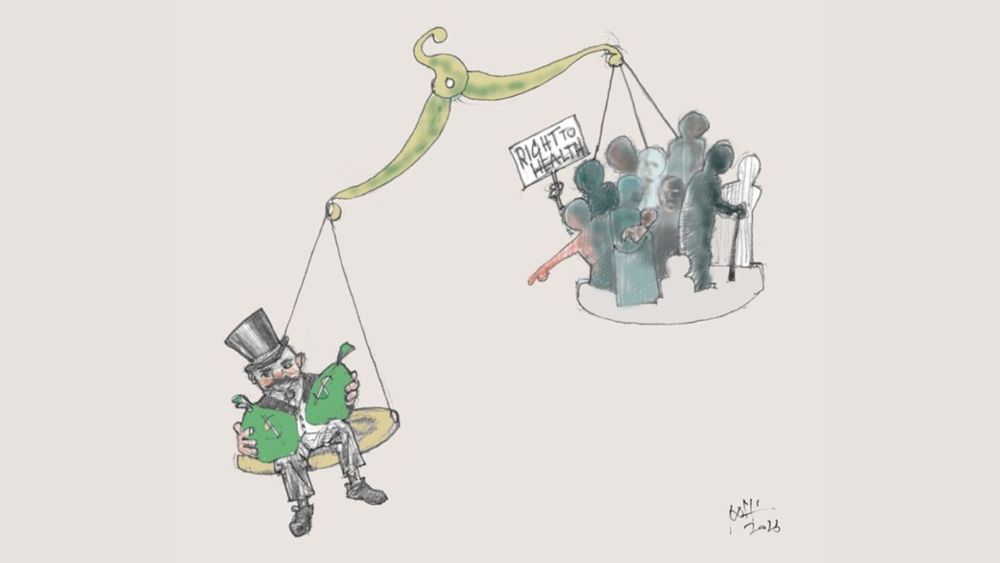
The global health and international development system is broken. Designed within an economic framework that maintains wealthy countries hegemony at the expense of a poor and subservient global south, it has failed to address the root causes of poverty and inequality, and perpetuated health inequity and dependency. Now is the moment to establish the foundations for a health needs- and justice-based global health architecture—where access to healthcare and health technologies is a right, not a privilege dictated by wealth or market power. This will require rebalancing powers and re-writing the economic rules and policies, including the global finance architecture, with health for all at the centre.
A rude awakening
The brutal and cruel cuts to U.S. global health funding threaten millions of lives in low- and middle-income countries (LMICs), sparking urgent mobilization to reverse these dangerous decisions or mitigate their impact. While this immediate fight is critical to avert the humanitarian emergency at hand, this crisis also serves as eye-opener on the deeper flaws in the international aid and development system.
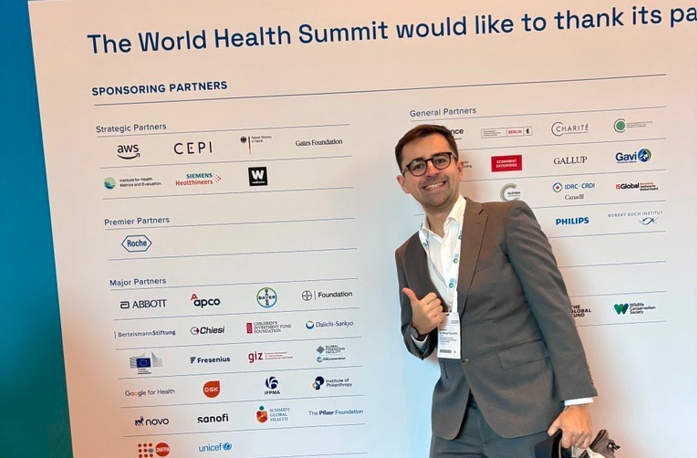
For decades, “global health”—a misnomer for health of people in LMICs—has been shaped by high-income countries (HICs) and organizations like Gavi, the Global Fund, PEPFAR, and the World Bank, funded and governed by Western donors. While delivering lifesaving interventions, they also dictated priorities, operational models, and financing modalities, often aligning with their own geopolitical and economic interests rather than the needs or preferences of LMICs. The result? A system that treats health as a geopolitical tool and marketplace rather than a universal right.
A two-tiered system
One area where this dynamic is flagrant is medical innovation and access to medicines. In HICs, medicines, vaccines and other health technologies are both contributing to health and a key focus of economic growth. A “virtuous” cycle of well-resourced health systems and industrial policy with generous intellectual property protections, publicly subsidized R&D, and massive purchasing power including health insurance systems that are harnessed to pay high drug prices, fuel a thriving business model for the biotech and pharmaceutical sector. In contrast, LMICs are trapped at the recipient end of the pharmaceutical pipeline, where health technologies developed initially for wealthy markets are traded as ordinary—or at times luxury—commodities, available for those that can afford it.
The resulting lack of access to lifesaving medicines that is responsible for many preventable morbidity and mortality in LMICs is attributed to a “market failure”, rather than the policy failure it is. Consequently, solutions are sought through benevolent “market shaping”, creating pharmaceutical commodity markets for the poor and enticing companies to take part. Especially if donor funding is engaged for procurement, medicines and vaccines must be as cheap as possible, which is achieved through fostering economies of scale at one or a few large-scale low-cost producers, typically in China or India, and subjecting them to cut-throat market competition.
The resulting global pharmaceutical marketplace is highly imbalanced, with divergent business models governing the supply to HIC versus LMICs: one that is designed to create financial value for private shareholders, while the other is set up to produce big volumes at low cost for donor markets. Neither have people’s health or health equity as purpose. The power imbalance is most striking in the vaccine market where six international pharmaceutical corporations capture 82% of the vaccine market by financial value, producing less than 30% of the doses. In contrast, the Serum Institute of India is the single biggest vaccine producer supplying 22% of all doses, yet representing just 2% of the financial market value.
Promoted by the likes of Gavi, UNITAID and the Global Fund, such market-shaping approaches have expanded access for some, but entrenched a two-tiered market-based system for both medical innovation and access, keeping the global South dependent at all levels. The continued unwillingness of HIC and their powerful industries to engage in technology sharing beyond a few “voluntary and on mutually agreed terms” exceptions is stifling efforts to build health resilience and self-sufficiency through local innovation and manufacturing. This insistence on voluntary and market-based solutions, including by multilateral or multi-stakeholder global health institutions, has overtaken the earlier rights-based approach to access that HIV/AIDS activist pioneered in the late 1990s and early 2000s. As a result, LMICs continue to struggle for equitable access to health technologies like medicines and vaccines, including the right to use (“freedom to operate”) the underlying knowledge and technology platforms that would allow them to develop and produce life-saving health products by themselves.
The financial straitjacket
The US dollar-dominated global economy exacerbates these disparities. Institutions like the IMF and World Bank impose austerity measures and unsustainable debt burdens on LMICs, restricting their ability to invest in robust public health systems or building a virtuous cycle-based pharmaceutical ecosystem that can foster local innovation. Without access to affordable capital to invest in R&D, ideally in local currency and including grant funding, LMICs remain dependent on HICs and private companies to develop novel health technologies. Dollar hegemony further ensures that health financing remains tied to Western financial markets, leaving LMICs vulnerable to currency fluctuations and capital flight, and burdened with unsustainable debt traps that undercut the policy and fiscal space for LMIC to promote health as a right. Under the banner of “innovative financing”, a variety of blended financing approaches are being promoted that typically use public financing to attract and “de-risk” private financing. While it may increase the total amount of finance available, it flows primarily to those areas that can provide attractive returns for private capital, which does not necessarily align with needs, or equity.
A Way Forward
For too long, the pervasive narratives of market failure, market shaping and building competitive markets for medicines and vaccines as commodities have obscured any other solution to achieve equitable and affordable access to health technologies for all It is time to reclaim what was never truly lost – an ethics of health as a human right and ensuring that health technologies are developed and equitably available for all as a matter of justice, solidarity, collective action and shared responsibility.
Instead of focusing on “business models” and using the language of markets and competition, we must put improving people’s health and equity at the centre of a new value proposition for health innovation. LMICs with scientific and technological capacity must reclaim agency and drive an R&D agenda to address local and regional health needs, mobilizing researchers, developers and manufacturers in the global south into this collective effort. Global intellectual property rules that have privatized knowledge and know-how in favour of HIC and their industries must be rewritten to provide freedom to operate over critical health technologies and platforms to serve the public interest. And well-designed financing and industrial policy must be directed to prioritize health equity and addressing people’s health needs over market efficiency and profit-making.
Doing this in a sustainable way will require a health needs-driven whole-of-government approach, in which different health, finance, and industrial policies and incentives complement each other to build an end-to-end ecosystem that can make available needed health technologies for health. In parallel, urgent reform of the international financial architecture is needed. The question is no longer whether the system must change, but how. And if not now, then when?
About the author
 Dr Els Torreele is a global health equity and medical innovation expert, and Founding Director of æqua, a recently created Think Space on Equity and Economic Justice for Health. A Bio-Engineer and PhD from Brussels University, for over 20 years she has combined biomedical research, pharmaceutical R&D, policy analysis and research, and advocacy including in senior roles at the Médecins Sans Frontières (MSF) Access Campaign, Drugs for Neglected Diseases initiative, Open Society Foundations, UCL’s Institute for Innovation and Public Purpose, and since 2020 as Independent Researcher and Advisor.
Subscribe to our newsletter to stay up to date about blog posts and seminars from the Collective of the Political Determinants of Health.