After decades of steady growth in development assistance for health, since the end of the COVID-19 pandemic, aid financing for health has been in freefall. A cautious estimate suggests that ODA for health could fall by around 40 per cent in 2025 compared to 2023, with expenditures potentially dropping from roughly US $25 billion to around US $15 billion.
At the centre of this upheaval has been the United States — historically the world’s largest donor of health and development aid. In early 2025, the U.S. government effectively dismantled the U.S. Agency for International Development (USAID), cancelling roughly 82 per cent of its programmes. Those cuts translate into tens of billions of dollars in defunded foreign assistance, with consequential impacts on global health investments that previously supported disease control, maternal and child health, and pandemic preparedness.
The United Kingdom, too, has made dramatic reductions, lowering annual aid from 0.5 per cent of gross national income (GNI) to just 0.3 per cent by 2027.
These shifts in donor behaviour not only threaten to reverse decades of health gains in developing countries, but they also expose the fragility of health systems that have become too reliant on external financing. Leaders in recipient countries now face a stark reality: relying on unpredictable and inflexible aid financing is no longer a viable strategy for achieving UHC.
But as the aid safety net vanishes, might this apparent crisis create a political window of opportunity for leaders to seize the moment to build more robust, domestically financed health systems delivering UHC?
Nowhere is this convergence of crisis and opportunity more evident than in parts of South Asia, where political transitions following national crises offer windows of opportunity for progressive leaders to champion popular universal health reforms. This would entail giving the whole population an entitlement to a comprehensive package of publicly-financed health services.
Bangladesh, for instance, is poised for a crucial national election in February 2026 — the first since the mass uprising of 2024 that toppled Sheikh Hasina and reshaped the political landscape. Amid intense debates about governance reform and public service delivery, health sector reforms could emerge as a key electoral issue. One leading party is already campaigning on platform to launch a Bangladeshi version of the UK’s National Health Service, providing universal free healthcare.
Similarly, Nepal is heading for the polls in 2026, following widespread protests and political instability, reflecting deep public dissatisfaction with governance, including basic services such as health. In fact, the Nepali population has already demonstrated a preference for political parties championing UHC reforms, when in post-civil war elections in 2009 it voted for leftwing parties committed to remove health care user fees. So might popular pro-poor health reforms, requiring commitments of additional public financing prove decisive in this year’s poll?
South Africa also shows how this phenomenon could play out in an upper-middle-income setting, where huge reductions in aid financing, especially from the US, might prove instrumental in encouraging the government to replace its inequitable American-style health system with a universal single-payer financing model. This could be achieved by fast-tracking its much-awaited National Health Insurance reforms which would align South Africa more closely with global UHC norms and leave the United States as the only country in the G20 without a universal publicly financed health system.
For South Africa, this would not be just health policy reform: it would represent a strategic response to a geopolitical shock that could enable the country to tackle entrenched inequalities and social fragmentation, which in turn could underpin economic and social resilience for generations to come. This would deliver huge political benefits to President Cyril Ramaphosa both domestically and internationally and secure his legacy as yet another leader who brought domestically financed UHC to their people after a period of crisis.
As the Director General of the WHO, Dr Tedros has often said, achieving UHC is a political choice — and one that can be made even under fiscal pressure and domestic instability. As aid budgets evaporate, no leader can afford to wait for external financing to save their health systems. The moment for bold, domestically financed universal health reform is now — and the political windows opening in Bangladesh, Nepal, and South Africa should not be wasted.
About the Author
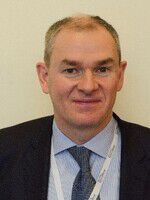
Robert Yates is a political health economist specializing in universal health coverage (UHC) and progressive health financing. He is a Visiting Professor in Practice at the London School of Economics and an Honorary Associate Professor at the London School of Hygiene and Tropical Medicine.
Between 2019 and 2024 he was the Executive Director of the Centre for Universal Health at Chatham House and was previously a long-term consultant to The Elders on their universal health programme.
He has special expertise in the political economy of UHC, with a focus on advising political leaders and government ministries on how to plan, finance and implement national UHC reforms.
He has previously worked as a senior health economist with the UK’s Department for International Development (DFID) and the World Health Organisation, advising numerous governments in Asia, Africa and Europe on health financing policy and health systems reforms.
He holds a BA degree in Natural Sciences and Economics from the University of Cambridge and a MBA, from the University of Leeds.
Subscribe to our newsletter to stay up to date about blog posts and seminars from the Collective of the Political Determinants of Health.