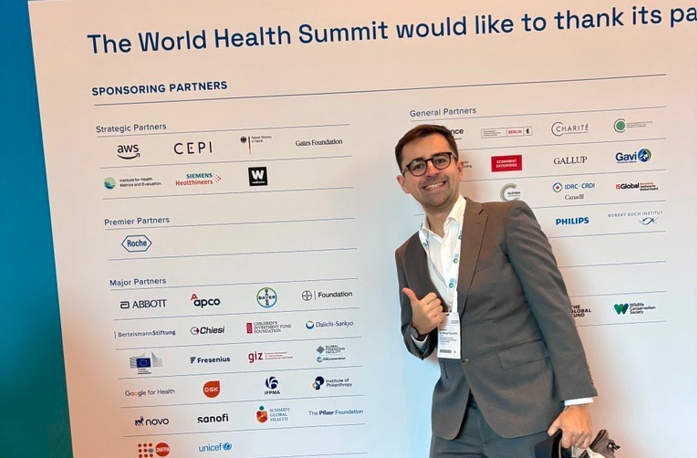
In June, Dina Kirpalani, Abhay Shukla and I spoke at the Global Health Security Conference, where we led a panel on global health security in the era of financialisation. At a conference oriented towards technical fixes, our panel made the case for understanding global health security in socio-political and economic context, specifically one that is remaking global health in the mould of finance. Here I outline three key domains in which financialisation is transforming global health security.
First, financialisation is shaping the emergence and mitigation of health threats by restructuring human-animal-environment relationships. The rise of ‘shareholder primacy’ in corporate governance is driving expansion of sectors like industrial agriculture, and heightening pressure to expand and intensify production. Market consolidation may facilitate improved regulation and governance, but continued growth incentivises deforestation, habitat encroachment, and intensive farming practices; all fertile conditions for zoonotic spillover events.
Second, financialisation is influencing the spread of health threats by altering social milieu through which they move. While there is scope for financial investment to increase food production, augment housing stock and create jobs, these key sectors are being transformed into investible assets driven by financial logics. This risks producing food systems, housing sectors and labour markets that prioritise efficiency, cost reduction, and asset value over other concerns. The proliferation of ultra-processed foods linked to industrialised agriculture contributes to poor nutritional outcomes, weakening population-level resilience. The assetisation of housing drives up costs and fosters homelessness and overcrowded and substandard living conditions. Meanwhile precaritisation in labour markets reduces income security and access to protections, undermining health and wellbeing and limiting people’s ability to respond to health shocks. These social contexts leave communities more exposed to risk and less able to recover from crises.
Third, financialisation is reconfiguring detection and response systems through new forms of financing and governance. Private investment in healthcare and pharmaceutical infrastructures may seek to expand capacities but also produces structures and logics aligned with investor priorities. It tends to favour business models that pursue profitability through cost-cutting, higher prices, and lean staffing models, thereby increasing inequality and reducing surge capacity during crises. At the same time, global health initiatives are turning to private investment to mobilise additional resources, intensifying tensions between financial risk and human need and raising questions about the opportunity cost where resources are diverted from public health infrastructure and prevention activities.
In short, finance and financialisation are increasingly central to sectors and institutions that impact global health security: they shape the conditions that generate health threats, influence the pathways through which they spread, and reconfigure the systems designed to detect and respond. Importantly, these processes risk exacerbating inequalities such as class, race, and gender when they disproportionately impact marginalised populations and those with more limited access to resources. Recognising the significance of financialisation for global health security allows us to respond to emerging trends and embed equitable approaches in the design and regulation of future activities.
About the author

Ben Hunter is Senior Lecturer in International Political Economy at the University of Glasgow. He works at the intersection of health and development, with a particular interest in issues of market formation in and around healthcare. This has included research projects on the commercial intermediaries operating within markets for healthcare provision and markets for healthcare training and recruitment; the corporatisation and consequent transformations taking place within private healthcare sectors; use of development aid and public-private partnerships to promote private provision of healthcare services; and the strategic efforts underway to position countries within a globalised commercial healthcare economy. Ben has drawn attention to the financialisation processes unfolding within national healthcare systems and the broader field of global health, and the challenge this poses for equitable access to healthcare services. His book, Investor States: Global Health at the End of Aid (2023, Cambridge University Press), charts recent trends wherein states operate as, with and for investors in the healthcare provision sectors of other nations, driving the expansion of corporate-oriented models for healthcare. Prior to joining the University of Glasgow, Ben worked at University of Sussex, King’s College London and as a researcher in the UK Parliament.
Subscribe to our newsletter to stay up to date about blog posts and seminars from the Collective of the Political Determinants of Health.