Neoliberal attacks on public health persist. People continue to suffer from the unequal distribution of power and disease. The pandemic and its consequences have made it clear how essential a strong public health system is. However, the dominance of neoliberalism was further entrenched during and after this critical conjuncture. With the rise of far-right populist movements, hope for change seems to be fading.
Yet, in fact, a transformative power does exist within the health sector. Centered on the right to health, health equity, and Health for All, social movements have achieved notable successes. Activists, researchers, and practitioners have built a counter-hegemonic formation against neoliberal hegemony, and it has affected our common sense. The power certainly exists.
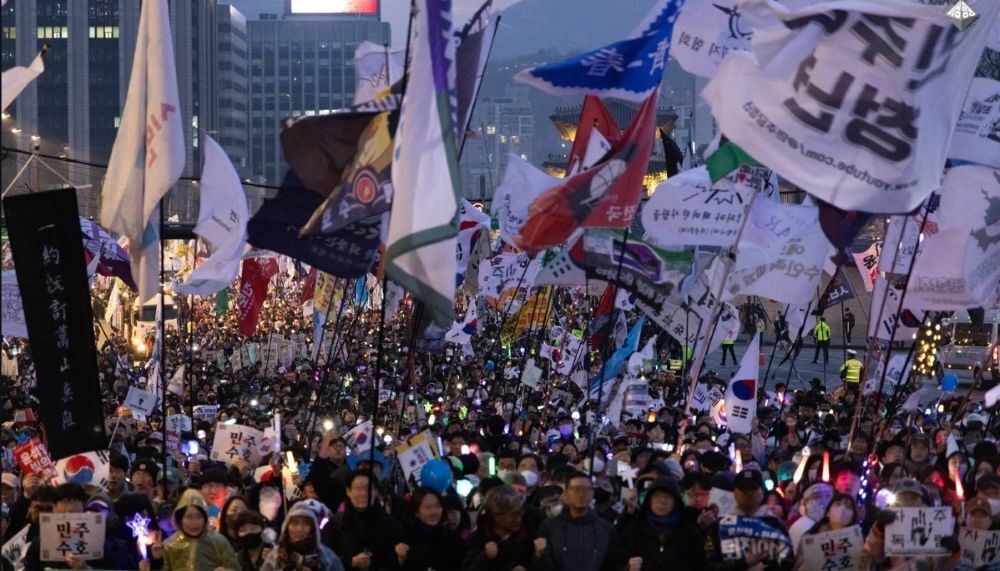
Chang-yup Kim and I recently published a study on such a case in South Korea. Grounded in the discourse theory of Ernesto Laclau and Chantal Mouffe, we analyzed the power and key components of a counter-hegemonic movement. The joint initiatives by the state and capital to privatize the National Health Insurance were successfully resisted through social movements and the civic participation of ordinary people. Our study demonstrated that antagonistic discourses—including a ‘publicness’ empty signifier articulated to the public health institution—and the values of the health sector, such as the right to health and health equity, had hegemonic power for over a decade. This shows the transformative potential of the health sector.
Still, much work remains to be done. This transformative power must go beyond the national level. It should transcend borders (and the “nationals”) and connect with the global movement (and all people). The signifiers and signifieds must extend beyond healthcare to address broader social and structural determinants of health. Our efforts should not only meet people’s needs but also resonate with their normative core—such as “Liberty and Equality for All”. There is a pressing need for more radical and creative strategies to connect our narratives with ordinary people. They should shed light on domination and the suffering of powerless people, while empowering fellow citizens to critically envision a more equitable and democratic world. It must go beyond the health sector.
Indeed, as we concluded with “Hegemony as Capitalist Strategy”, the counter-hegemonic movement should target the totality that perpetuates the unequal position of power and health inequity: “The health sector is where ‘objective’ structural institutional crisis, such as the privatization of the health system and its ramifications under capitalism, manifests in the ‘subjective’ responses of those living through it, leading to a hegemonic crisis of the current institutions and system. Health and illness can serve as a nodal point for such a strategy as they constitute fundamental human experiences. Responses to these experiences could generate new demands for health institutions and the underlying societal order”. We must strategically direct this potential toward system-wide reforms, establishing a broader counter-hegemonic alliance that transforms structural determinants. Our target should include the naturalized roots.
This blog post is based on the following article: Ha, J. and Kim, C.-y. (2025), The Power of ‘Publicness’ Discourse: An Analysis of Counter-Hegemonic Formation Against Health System Privatisation. Sociology of Health & Illness, 47: e70020. https://doi.org/10.1111/1467-9566.70020
About the author
 Jiwoo HA is a researcher whose work explores democracy, health politics, health justice, public health ethics, and global health. He aims to further study domination and capitalism with a focus on health. He recently published “The Power of ‘Publicness’ Discourse: An Analysis of Counter-Hegemonic Formation Against Health System Privatisation” (Sociology of Health & Illness, 2025).