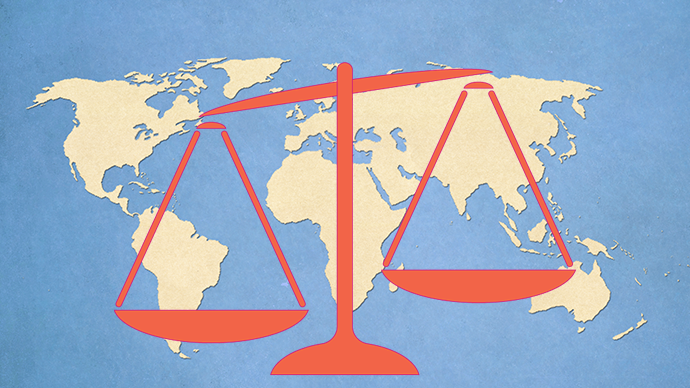
Outmigration of health workers plagues health systems in low- and middle-income countries (LMIC). In 2023, there was a shortage of approximately 15 million health workers globally, mostly in the African and South-East Asian region. This shortage has been fuelled by high-income countries (HIC) drawing large swathes of their health workforce from LMICs. In 2022, 28% of the UK’s physician workforce were international medical graduates (IMG), with South Asia, the Middle East and Africa contributing more than 80% of IMG recruits in 2021. It is estimated that LMICs incur a loss of about USD 15 billion annually as a result of physician outmigration.
Sri Lanka after the economic crisis
Sri Lanka, where I live and work, experienced an economic crisis in 2022, resulting in soaring inflation, electricity disruptions, and shortages of essential goods, including medicines. The public healthcare system is under tremendous strain, intensified by a surge in outmigration of health professionals. The Sri Lankan Minister of Health recently revealed that over 4,600 health professionals have migrated overseas from the state sector since the economic crisis.
With an annual output of approximately 1200 medical graduates, state medical schools in Sri Lanka provide non-fee levying medical education under the country’s ‘Free Education’ policy (there are no private medical schools at present). Medical graduates are guaranteed employment in the state sector. In 2022, about 23,500 doctors (including 2800 specialists) served in the public system. The average annual salary of a specialist in the state sector is about USD 14,000 based on current exchange rates, while in HICs it is, on average, 10 times higher.
Sri Lanka is now ranked among the top five source countries for physician recruitment to the UK’s NHS, and is also a top country of origin for the Australian Medical Council. In 2024, the NHS saw a 121% increase in Sri Lankan staff with a total of 3082 Sri Lankan doctors in practice. Based on the number of doctors who left government service during the 2022–2024 period, Niriella et al. (2025) estimate a loss of approximately USD 41.5 million per year.
The mass exodus of health professionals has resulted in an acute medical crisis, felt particularly strongly in rural and post-war areas. Eight out of nine provinces in Sri Lanka lack a child and adolescent psychiatrist, and many of the biggest healthcare facilities in remote districts struggle without psychiatrists altogether. Many peripheral centres also lack surgeons and anaesthetists, resulting in many not receiving essential surgical care. Existing measures of redress (e.g., bonds for postgraduate medical education), do not consider this disproportionate impact on rural peoples.
Weak WHO code
At the World Health Assembly 2025, Sri Lanka’s Minister of Health called for destination countries to adhere to the WHO Global Code of Practice on the International Recruitment of Health Personnel. But is the Code adequate? It does call for limiting international recruitment and appeals to countries to rely on health professionals produced within their national borders; it also asks that member states respect contractual obligations of source countries, with the caveat that “nothing in [the] Code should be interpreted as limiting the freedom of health personnel, in accordance with applicable laws, to migrate to countries that wish to admit and employ them.”
Unsurprisingly, the Code has not curbed outmigration of health workers from LMICs. According to a 2025 report by the WHO Director-General, “23% of the world’s doctors, nurses and midwives are based in 10 high-income countries that comprise 9% of the world’s population, compared with only 5% in the 55 countries in the WHO Support and Safeguards List 2023, representing 21% of the world’s population” (p.5). A 2017 WHO report depoliticizes the migration question by blurring distinctions between source and destination countries (p.8). Its analysis fails to consider the level, sector, and location of the LMIC health facilities that attract foreign nationals, i.e., whether primary/secondary/tertiary, rural or urban, public or commercial hospitals.
Ongoing neo-colonialism?
A WHO (2023) study on bilateral agreements on health worker migration and mobility calling for agreements to prioritize “the right to the highest attainable standard of health of populations in both countries of origin and destination” (p. ix), suggests that existing agreements are driven by the prerogatives of destination countries, underpinned by their labour, economic and/or trade priorities. It points out that the goal of supporting health systems strengthening in countries of origin, as per the WHO Code, has not been realized, given the lack of incentives to do so.
The systematic poaching of health professionals from LMICs must be seen for what it is—as neo-colonial extractivism, understood as continued extraction of resources and wealth from independent states by former colonial powers. WHO should acknowledge the disadvantaged position of (most) LMICs in negotiations and address such differentials through its policies.
A first step might be to establish a system to map the magnitude of health worker outmigration within bilateral agreements, outside such agreements, and their health systems impact. There is a need for data on the types of institutions that recruit international health professionals in destination countries. HIC governments should take stock of their colonial recruitment practices, adhere to ethical principles, and cooperate to strengthen health systems in LMICs.
About the author
Ramya Kumar is Senior Lecturer attached to the Department of Community and Family Medicine, Faculty of Medicine, University of Jaffna, Sri Lanka. Her training is in medicine and public health. Ramya’s research interests include access to healthcare, universal health coverage, the politics of global health, decolonizing global health, women’s health, and the application of critical feminist methodologies to exploring the social and political determinants of health. She recently completed a post-doctoral fellowship with the United Nations University-International Institute for Global Health in Kuala Lumpur, Malaysia, where her work focused on the accountability of powerful private actors in global health. Ramya has authored several publications on health policy and health reform in Sri Lanka. Her recent work with Anne-Emanuelle Birn, Going Public: The Unmaking and Remaking of Universal Healthcare, explores the corporatisation of universal health coverage and its implications for access. Ramya is also a member of the Kuppi Collective, a group of university teachers committed to protecting free education, advancing critical pedagogy, and strengthening democracy in Sri Lanka. She writes regularly in the media to further her commitments to social medicine and health justice.
Subscribe to our newsletter to stay up to date about blog posts and seminars from the Collective of the Political Determinants of Health.