The World Economic Forum (WEF) is a large and very influential organisation, financed by fees from its 1,000 business members. In 2015, it was formally recognised as an international organisation, enjoying NGO consultative status with the Economic and Social Council of the United Nations. It declares its mission as ‘improving the state of the world by engaging business, political, academic and other leaders of society to shape global, regional and industry agendas’.
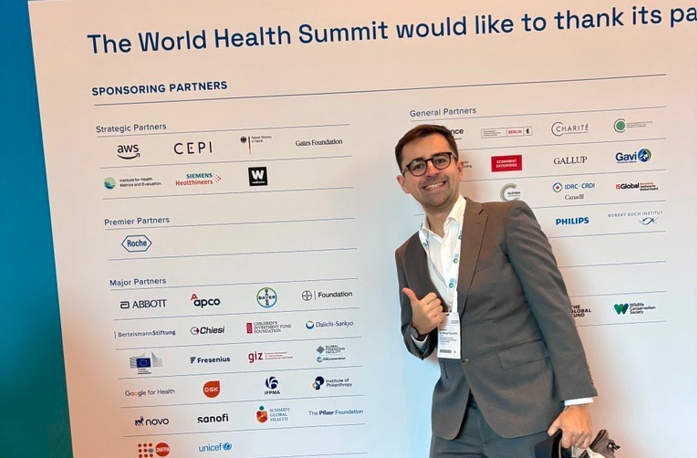
In the field of global health, it exerts influence in three main ways: by exercising convening power, most notably in Davos where the most powerful representatives of the private sector meet with heads of governments and international organisations; by shaping ideas through its role as a think tank; and by actively engaging in the design of public-private partnerships (PPPs), for example CEPI (Coalition for Epidemic Preparedness Innovations). But to whom is it actually accountable?
The WEF began as a ‘symposium’, organised in Geneva in 1971. Its founder, Klaus Schwab, had studied business management in the US and been impressed by the so-called ‘stakeholder’ approach. The Forum both influenced and benefited from the increased interest of UN bodies at the turn of the century in working with the private sector. Discussions with then UN Secretary-General Kofi Annan led to the Global Compact, announced in Davos in 2000. This was ‘a voluntary initiative based on CEO commitments to implement universal sustainability principles and to take steps to support UN goals’. https://unglobalcompact.org/ It marked a significant shift towards increased UN engagement with the private sector.
Following the 2008 global financial meltdown, the WEF proposed a Global Redesign Initiative (GRI) – explicitly based on a concept of global governance in which the private sector would occupy a central place. It proposed an international system that is “a wider, multifaceted system of global cooperation in which intergovernmental legal frameworks and institutions are embedded as a core, but not the sole and sometimes not the most crucial, component” (World Economic Forum, 2010: 7) (my emphasis). This rather stark grab for private sector power understandably attracted the attention of critics.
Three sources of power
The WEF has certainly become a highly visible actor on the world stage, with the annual Davos meeting as its most iconic event. Such convening power has traditionally been associated mainly with formal United Nations bodies. In the case of global health this is the World Health Organisation (WHO); but now, the WEF has significantly encroached on its position. World leaders appear more willing to go to Davos than Geneva; and WHO Director-Generals often attend Davos as invitees.
The WEF also exercises discursive power through its innumerable publications, such as the annual Global Competitiveness Report (GCR) and the Global Risk Report (GRR). The central message of the GCR is that the world faces an array of major risks and that the private sector can and should play a major part in confronting these – thanks to its particular management skills. In brief, the solution is a public-private partnership (PPP).
Thirdly, the WEF exercises entrepreneurial power through its involvement in specific initiatives. In the health sector, the WEF’s role has gradually evolved over time, from merely providing a location for announcing a new PPP – as with Gavi (the Vaccine Alliance) and the Global Fund to Fight AIDS, Tuberculosis and Malaria – to playing a substantive part in their design, such as in the case of CEPI (Coalition for Epidemic Preparedness Innovations). As a member of the WEF, a company can enjoy some public relations benefit from being associated with such initiatives. And this is at very little cost; the private sector has never made more than a minimal financial contribution to them (less than 2 per cent of the total). It is donor countries, and foundations such as Bill & Melinda Gates, that foot the bill.
The WEF's Philosophy and role
Schwab’s initial ‘stakeholder’ philosophy could be seen as an attempt to soften the brutality of a system driven by private sector self-interest, by including workers and consumers in decision-making. But today, the WEF sees its purpose very differently: promoting the role of multinational companies as global stakeholders, deserving a place at the table ‘together with governments and civil society’ (international organisations are not mentioned). https://www.weforum.org/agenda/2019/12/davos-manifesto-2020-the-universal-purpose-of-a-company-in-the-fourth-industrial-revolution/ Thus, in practice, the WEF has served to insert the private sector into the international policy-making arena, giving big business a position of influence, in competition with established international organisations such as the World Health Organisation (WHO).
Accountability
The WEF enjoys wide latitude with regard to both transparency and accountability. This relates to its somewhat ambiguous organisational status. It is not an international organisation in the standard meaning of the world. One might rather describe it as a private international organisation; or perhaps more accurately as a private global organisation, since nations are not represented in its governance. This contrasts with the WHO which is accountable to the governments that have mandated its existence and pay its costs, most notably through the annual meetings of the World Health Assembly.
Even its members, the 1,000 funding corporations, do not ‘govern’ the WEF. Indeed, the question of leadership has recently become an issue. Schwab is now aged 85, and according to the Guardian, his position became a talking point in connection with the January 2023 Annual Meeting in Davos, where employees “voiced strong criticism of their chair and the lack of a succession strategy.” https://www.theguardian.com/business/2023/jan/18/mutiny-erupts-among-wef-staff-over-role-of-mr-davos-klaus-schwab The WEF was described by them as “a multi-generation family business”, it being noted that Article 11 of WEF’s governing statutes states “the founder designates his successor.”
WEF has been criticized by outsiders; but as long as CEOs are willing to finance it, and members of the world’s elite continue to attend its meetings, it is in a strong position. If the negative views of its own staff continue, however, it may, ironically, be they who contribute to bringing about at least some change.
The WEF’s initial philosophy, based on the concept of ‘stakeholder capitalism’, could be interpreted as seeking to moderate corporate power: to encourage firms to act in a way that is socially responsible. But what the WEF has in fact done is to both encourage and benefit from a shift in global opinion toward the view that the private sector can, and should, play a major role in global governance. It has clearly sought to increase the power of corporations at the expense, inter alia, of multilateral organisations such as the WHO. The WEF is a novel form of international organisation; its members – the 1,000 firms that finance it – are from the private sector. Yet it appears to lack accountability even to them.